US Officials Conclude Uganda Visit, Promise Ebola Response Support
US Officials Conclude Uganda Visit, Promise Ebola Response Support
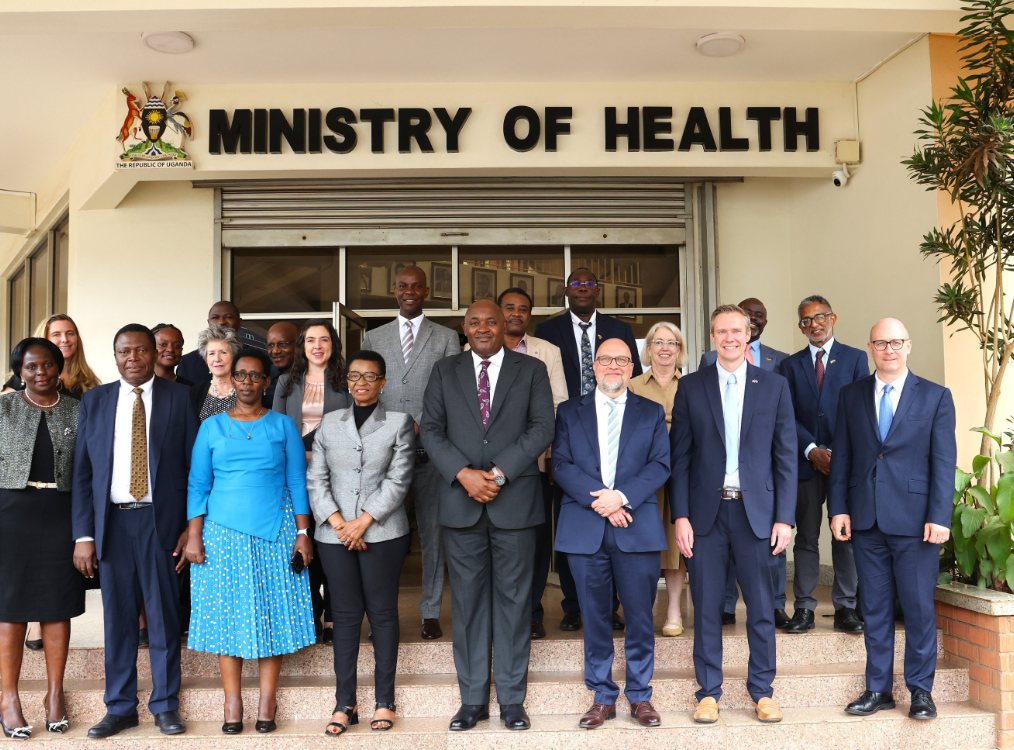
KAMPALA, Uganda – Senior United States officials have concluded a visit to Uganda aimed at strengthening cooperation on regional Ebola preparedness, reaffirming Washington’s commitment as the largest donor supporting the regional response to the disease.
During the visit, the delegation met Uganda’s Minister of Health, Dr. Chris Baryomunsi, before visiting Ebola screening operations at Entebbe International Airport and the Uganda-Democratic Republic of Congo (DRC) border, where they were joined by State Minister for Primary Health Care, Dr. Charles Ayume.
The visit comes as Uganda continues to strengthen surveillance and border screening to prevent the spread of Ebola from neighbouring eastern DRC, where outbreaks have periodically posed a public health threat.
According to the U.S. Embassy in Kampala, the delegation assessed screening measures at key entry points and discussed Uganda’s Ebola preparedness and response with health officials.
The officials also toured the Uganda-DRC border, where health workers continue screening travellers, monitoring cross-border movement and strengthening disease surveillance.
Uganda shares a long and busy border with the DRC, making early detection and rapid response critical in preventing the spread of infectious diseases.
United States said it has committed more than $370 million to support the regional Ebola response, making it the largest international donor to efforts aimed at containing the disease.
The funding supports surveillance, laboratory testing, emergency response operations, infection prevention and control, risk communication, and the training of frontline health workers across the region.
US officials said the support builds on the US-Uganda Health Memorandum of Understanding, under which Washington has invested more than $2.3 billion in Uganda’s health sector over the years.
U.S. Embassy said the visit highlighted the long-standing partnership between Uganda and the United States in strengthening public health systems and improving preparedness for disease outbreaks.
According to the embassy, the collaboration is intended to help Uganda and the wider region build resilient health systems capable of responding quickly to emerging health threats while promoting long–term health security and self-reliance.
Uganda is internationally recognised for its rapid response to Ebola outbreaks, including surveillance, contact tracing, laboratory testing and community engagement.
Health experts say continued international cooperation remains essential because of the high volume of movement across the Uganda–DRC border, where the risk of cross-border transmission remains significant during outbreaks.
Officials say sustained investment in preparedness and surveillance is critical to detecting cases early, containing outbreaks and protecting communities across East and Central Africa.
Ugandan and US officials are expected to continue working together on disease surveillance, emergency preparedness and strengthening health systems as regional efforts to prevent and contain Ebola continue.