Museveni Hails Kayoola E-Coach Expedition, Calls for Faster Industrialisation
Museveni Hails Kayoola E-Coach Expedition, Calls for Faster Industrialisation
President Yoweri Museveni has praised Uganda’s successful Pearl to Cape Expedition 2025, describing it as proof that African countries can design, manufacture and export advanced technology, as he called for faster industrialisation and greater government support for local manufacturers.
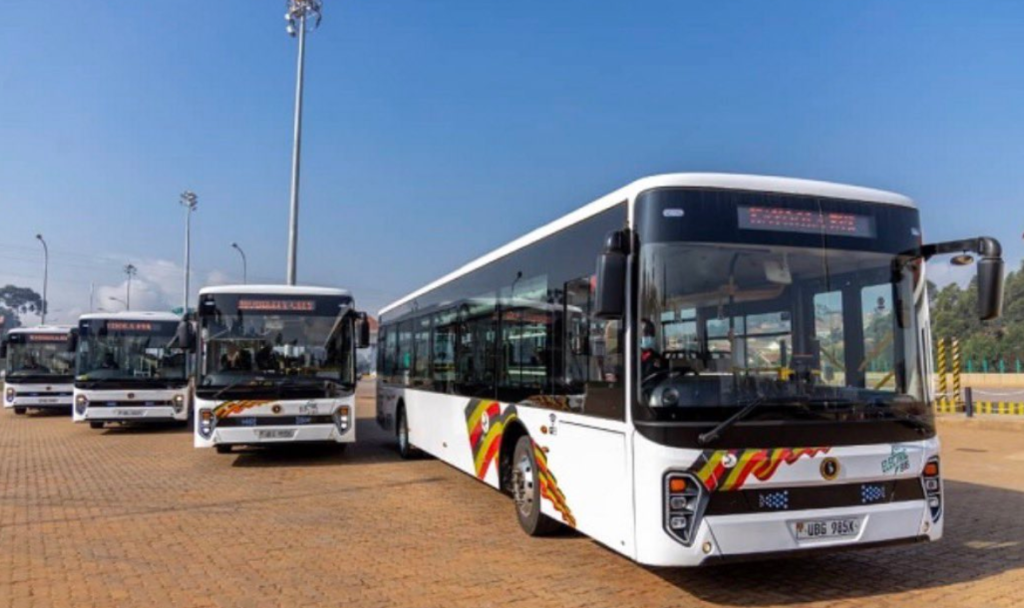
Speaking during a homecoming luncheon for the expedition team, Museveni congratulated Kiira Motors Corporation after its Kayoola E-Coach completed a return journey from Uganda to South Africa, a mission aimed at demonstrating the viability of African-made electric mobility across the continent.
“This historic achievement demonstrates that Africa can design, manufacture and export its own technology,” the president said.
Pearl to Cape Expedition 2025 saw the fully electric Kayoola E-Coach travel more than 13,700 kilometres through Uganda, Tanzania, Zambia, Botswana, Eswatini and South Africa before returning home. The expedition tested the vehicle’s performance across varying terrain while showcasing Uganda’s ambitions to become a regional hub for electric vehicle manufacturing.
According to Kiira Motors, the expedition demonstrated the coach’s ability to undertake long-distance travel using electric power, while also promoting sustainable transport and regional trade under the African Continental Free Trade Area (AfCFTA) framework.
During the luncheon, Museveni said Uganda’s industrial future should build on the country’s historical tradition of artisanship and indigenous innovation.
“Before colonialism, our people had an integrated economy built on artisans and indigenous knowledge. Our task now is to restore that foundation through modern industrialisation,” he said.
President also directed government ministries to accelerate support for the country’s automotive industry by securing financing for manufacturers, guaranteeing government purchases of locally assembled buses and promoting domestic battery production.
“We must stop working slowly. Uganda’s industrial transformation cannot wait,” he said.
Kiira Motors, a state-backed company that grew out of research at Makerere University, has become the centrepiece of Uganda’s electric mobility strategy. The company operates the Kiira Vehicle Plant in Jinja, where it manufactures electric and diesel buses under the Kayoola brand. The plant has an initial production capacity of about 2,500 vehicles annually, with plans for future expansion.
The company says the expedition generated valuable engineering data while proving that electric buses can operate across Africa despite limited charging infrastructure. It also served as a platform to promote investment in clean transport technologies and locally manufactured vehicles.
Although the expedition has been celebrated as a milestone for Uganda’s manufacturing ambitions, analysts say the country’s electric vehicle industry still faces significant hurdles.
These include expanding charging infrastructure, attracting private investment, reducing production costs and increasing consumer confidence in locally manufactured vehicles. Experts also say government procurement policies and sustained investment will be crucial if Uganda is to compete with established global vehicle manufacturers.
For the government, however, the successful completion of the Pearl to Cape journey is being presented as evidence that Uganda can move beyond exporting raw materials and instead become a producer of high-value technology for African and international markets.