Kyambogo University Questioned Over Graduates Given Wrong Course Certificates
Kyambogo University Questioned Over Graduates Given Wrong Course Certificates
Parliament is investigating how Kyambogo University awarded some graduates certificates for courses they say they did not study.
Members of Parliament have questioned Kyambogo University over an apparent mix-up in the qualifications awarded to students who enrolled for a Diploma in Physical Education and Sports.
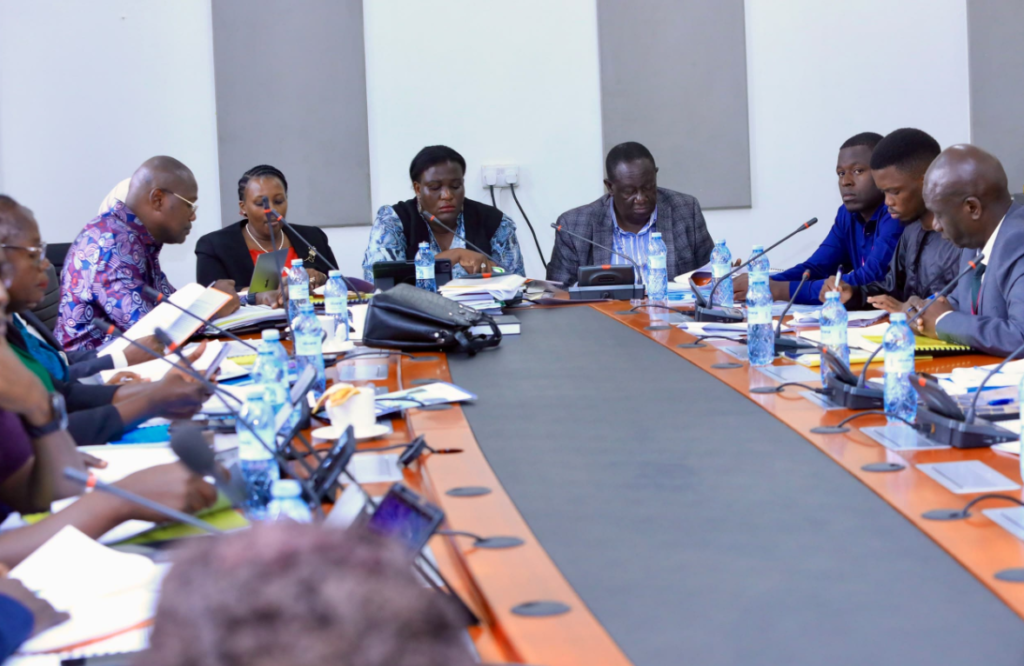
The issue emerged before Parliament’s Committee on Education and Sports where lawmakers heard that some students who had been admitted to study Physical Education and Sports instead received certificates indicating they had completed a programme in Sports Management.
The university’s Vice-Chancellor, Professor Justus Kwetegyeka told the committee that the discrepancy was an administrative anomaly and that steps were being taken to correct it through the university’s established procedures.
The case has raised concerns about the accuracy of academic records and the potential consequences for graduates whose certificates do not reflect the programmes they were admitted to study.
According to the parliamentary account, the affected students were admitted to programmes leading to a Diploma in Physical Education and Sports.
However, when their qualifications were issued, they received certificates for Sports Management instead.
The distinction matters because the two programmes can lead to different career paths particularly for students who expect their qualifications to support employment in teaching, physical education or other specialised roles.
Professor Kwetegyeka said the university was working to resolve the problem.
He did not, however, indicate that the students had deliberately received qualifications for courses they had not undertaken.
The parliamentary inquiry comes against the backdrop of a separate dispute involving former Kyambogo students and the title and accreditation of their qualification.
In June, Daily Monitor reported that several former students who graduated in 2019 had accused the university of failing to resolve a long-running disagreement over their academic qualification.
The former students said they had been admitted in 2017 through the Joint Admissions Board system under a Ministry of Education and Sports scholarship programme. They said they understood they were being placed on a teaching pathway in Physical Education and Sports Management.
The National Council for Higher Education, according to that report, said the programme had not been accredited when the students applied and were admitted.
That earlier dispute illustrates why the latest parliamentary concerns are significant. For graduates, the name and status of a qualification can affect applications for jobs, professional recognition and further study.
Kyambogo University has continued to advertise and admit students across education and sports-related programmes.
Its official website shows that the university operates formal admission procedures through its Academic Registrar and publishes admission lists for its various programmes. It also provides an online system through which academic documents, including certificates and transcripts, can be verified.
The university says its document-verification system allows graduates and other users to check certificates and transcripts using a QR code or student number.
The latest case therefore puts renewed attention on the university’s internal systems for ensuring that students are admitted, registered, examined and eventually certified under the correct programme.
For the affected graduates, the key question is how quickly the university can correct the records and issue documents that accurately reflect what they studied.
Academic certificates are more than graduation souvenirs. They are used by employers, professional bodies and other universities to establish what a person studied and what qualification they hold.
An incorrect certificate can therefore create problems long after a student has left university.
The parliamentary committee’s intervention is likely to focus not only on correcting the certificates but also on establishing how the error occurred and what safeguards are in place to prevent similar mistakes.
For now, the university says the anomaly is being addressed through its standard procedures.