What You Need to Know About Ebola
What You Need to Know About Ebola
Ebola Virus Disease (EVD) is a severe and often deadly illness caused by the Ebola virus. The disease has been responsible for several outbreaks in Africa over the years, particularly in countries such as the Democratic Republic of Congo and Uganda.
Health authorities continue to emphasize public awareness as one of the strongest tools in preventing its spread.
Ebola spreads through direct contact with the bodily fluids of an infected person or animal, rather than through air or casual contact.
The virus is transmitted when healthy individuals come into contact with infected fluids such as blood, vomit, urine, stool, saliva, semen, or sweat.
In most outbreaks, infection occurs in several key ways. These include caring for an infected person without proper protective equipment, handling contaminated objects like bedding or needles, and exposure during unsafe burial practices.
In some cases, people may also become infected through contact with infected wild animals such as fruit bats or monkeys.
Health experts emphasize that Ebola does not spread through the air like flu or COVID-19, but only through close physical contact with infected fluids or contaminated materials.
Signs and Symptoms of Ebola
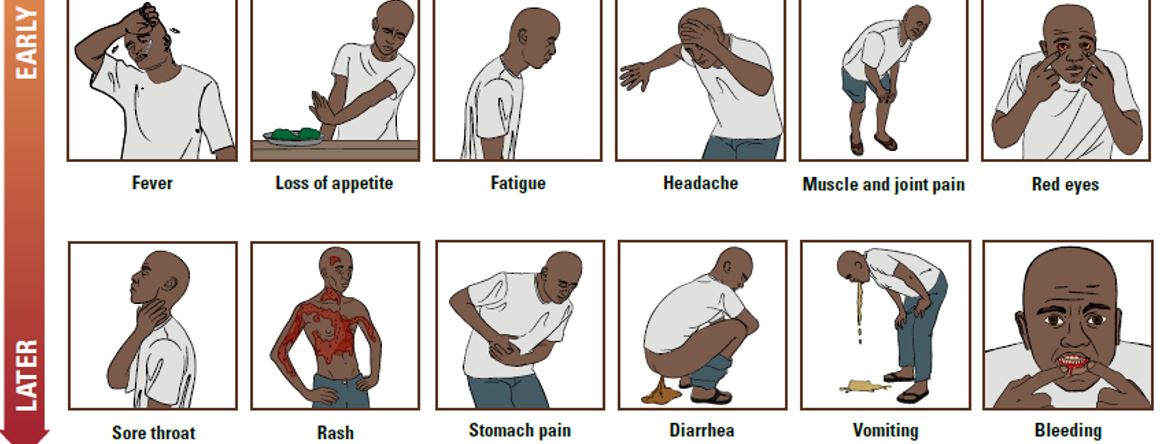
The symptoms of Ebola usually appear between 2 and 21 days after infection. Early signs can resemble common illnesses such as malaria or influenza, which can make early detection difficult.
Initial symptoms often include sudden fever, severe headache, muscle pain, sore throat, and extreme weakness.
As the disease progresses, patients may develop vomiting, diarrhea, skin rashes, and red eyes.
In more severe cases, Ebola can cause internal and external bleeding, organ failure, and shock.
However, not all patients experience bleeding symptoms. The disease can become life-threatening very quickly if not treated early in a controlled medical environment.
How Ebola Can Be Prevented
Although there is no universal cure for Ebola, infection can be prevented through strict hygiene and safety practices.
Public health experts recommend avoiding direct contact with infected individuals or their bodily fluids and ensuring proper protective measures when caring for sick patients.
Frequent handwashing with soap and clean water or using alcohol-based sanitizers is strongly advised.
Health workers and caregivers are encouraged to use protective clothing such as gloves, masks, and gowns when dealing with suspected cases.
Safe and supervised burial practices are also essential, as contact with the bodies of people who have died from Ebola remains a major source of infection. Communities are further advised to avoid handling or consuming bushmeat, especially in outbreak regions.
Early reporting of symptoms to health facilities is critical, as quick isolation and treatment significantly reduce the risk of spreading the virus to others.
Therefore, Ebola remains a dangerous but preventable disease. While outbreaks can spread rapidly under the right conditions, strong public awareness, early detection, and strict infection control measures have proven effective in stopping transmission.
Health authorities continue to stress that understanding how Ebola spreads and recognizing early symptoms are key steps in protecting individuals, families, and communities from infection.